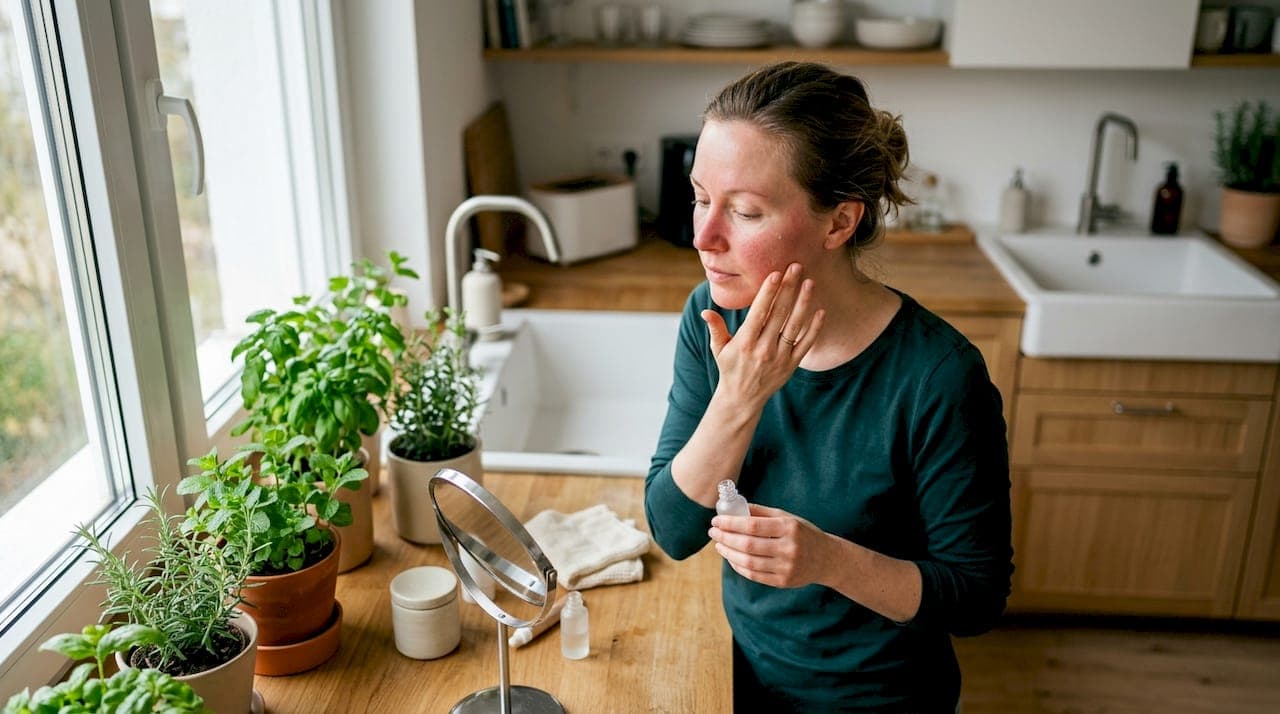
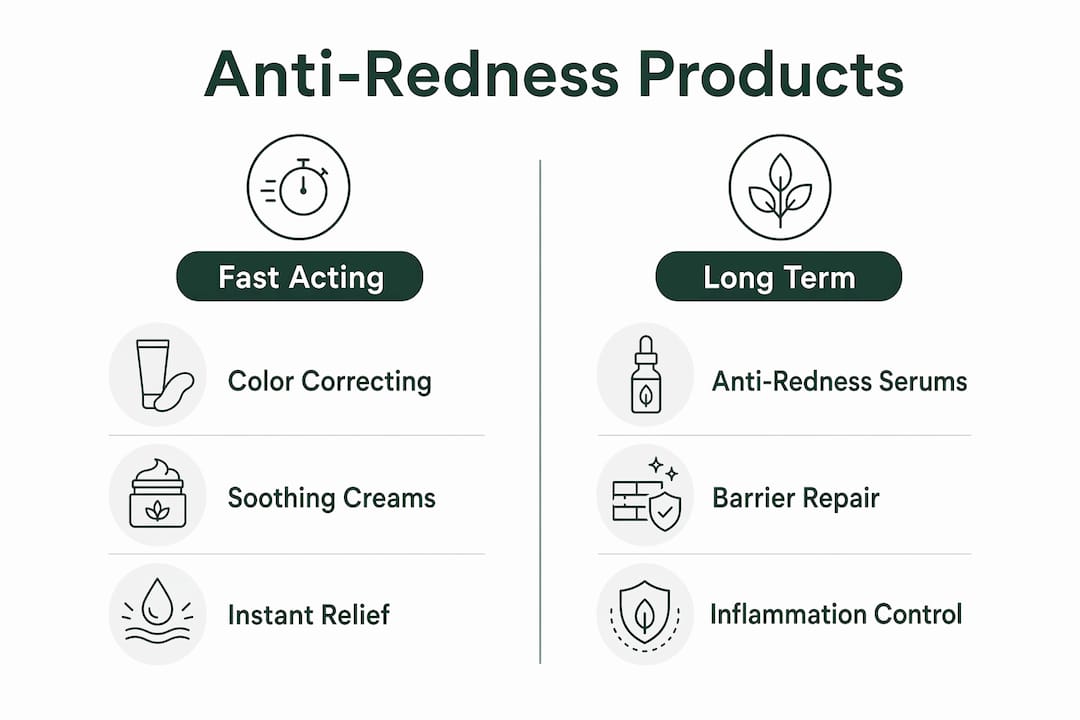
Redness reducing skincare is defined as any product or routine that calms skin inflammation, repairs the protective barrier, and neutralizes visible redness through clinically active ingredients. The industry term for this category is "anti-redness skincare," and it covers everything from fast-acting calming facial creams to long-term barrier repair serums. Effectiveness timelines vary widely. Some formulas deliver visible redness reduction within 15 minutes, while others require consistent use over weeks or months. The most effective approach combines immediate color correction with sustained barrier strengthening, giving your skin both quick relief and lasting resilience.
Which ingredients are proven to reduce redness in sensitive skin?
The right active ingredients separate genuinely effective anti-redness products from those that simply feel soothing. Clinically validated actives work through two main pathways: reducing inflammation at the cellular level and reinforcing the skin barrier to prevent further irritation.
Anti-inflammatory actives
Azelaic acid is one of the most studied ingredients for redness reduction. A 10% azelaic acid serum minimizes redness in as few as four days and is gentle enough for rosacea-prone skin. Allantoin and panthenol (vitamin B5) calm reactive skin and support cell repair without triggering further sensitivity. These three actives work well together and appear in many well-formulated serums.
Botanical soothing agents
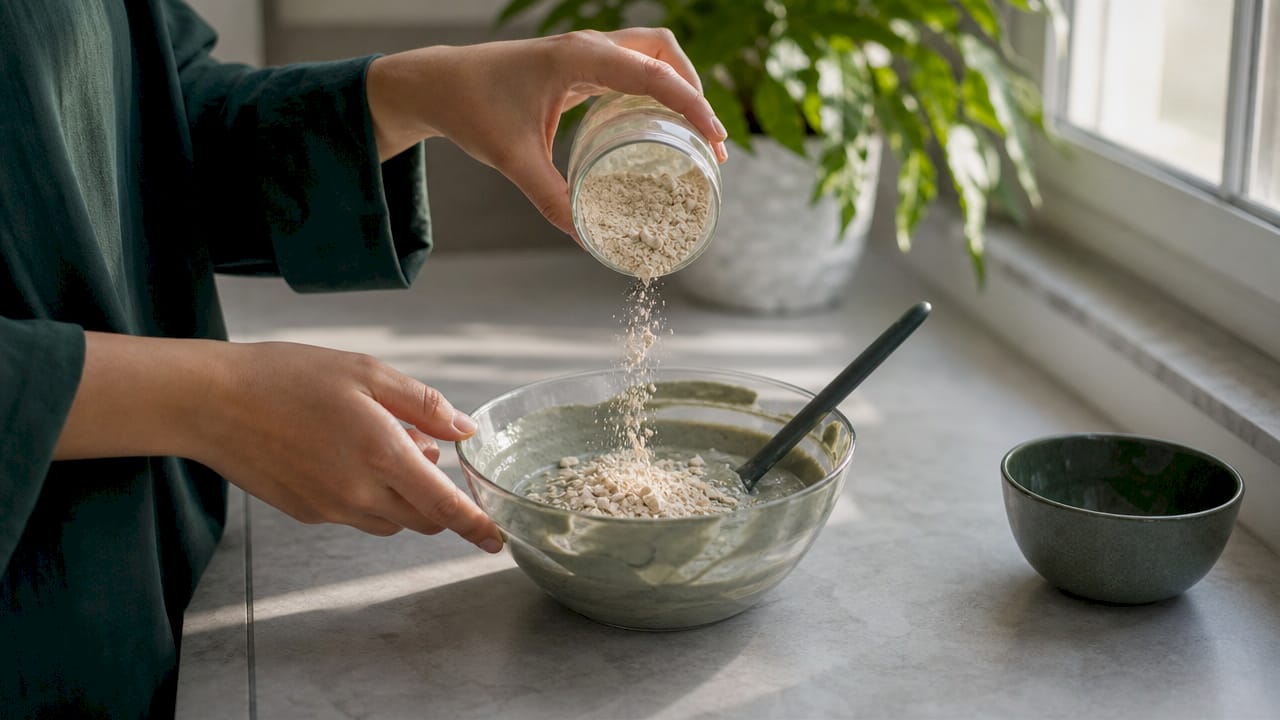
Colloidal oatmeal is one of the most trusted botanicals for sensitive skin. Products containing colloidal oatmeal that carry the National Eczema Association Seal of Acceptance are certified safe and effective on eczema-prone skin. That certification matters because it means the formula has been independently reviewed for irritation risk. Centella asiatica and green tea extract also reduce inflammation and strengthen capillary walls, making them valuable for skin that flushes easily.
Barrier support ingredients
Ceramides and hyaluronic acid rebuild the skin's outer layer, which is often compromised in people with persistent redness. Clinical testing shows that panthenol and hyaluronic acid together reduce moisture loss by 62.17% and improve soothing effects by nearly 19% in chemically irritated skin. That level of barrier support directly reduces the reactive sensitivity that causes redness to flare.
Ingredients to avoid
Fragrances and drying alcohols are the two most common triggers for reactive skin. High-tolerance formulations free from both ingredients stabilize reactive skin and reduce redness within about one week of consistent use. Avoiding these irritants is not optional for sensitive skin types. It is the baseline requirement for any anti-redness routine to work.
Pro Tip: When reading ingredient labels, look for "alcohol denat." or "parfum" near the top of the list. Both signal a formula that is likely to worsen redness over time, regardless of other soothing ingredients present.
How do different anti-redness products compare?
Not all soothing skincare solutions work the same way or at the same speed. Understanding product categories helps you choose the right tool for your specific concern, whether that is a sudden flush before an event or a persistent redness that has lasted months.
| Product type | Primary function | Speed of action | Best suited for |
|---|---|---|---|
| Anti-redness serum | Reduces inflammation, repairs barrier | Days to weeks | Daily use, persistent redness |
| Green color-correcting cream | Neutralizes visible redness instantly | Immediate | Sudden flushing, event prep |
| Barrier repair cream | Restores skin's protective layer | One to two weeks | Dry, compromised, or eczema-prone skin |
| Calming facial moisturizer | Hydrates and soothes surface irritation | Hours | Mild daily redness |
| SPF with anti-redness protection | Prevents UV-triggered redness | Preventive | All redness-prone skin types |
Green pigment-based color-correcting creams provide the fastest visible result. Instant color correction with botanical formulas has been shown to soothe irritation clinically in four to seven days, while the green pigment neutralizes redness on contact. That dual action makes color-correcting creams uniquely useful: they work cosmetically right away and therapeutically over time.
Anti-redness serums sit at the other end of the speed spectrum. A serum formulated for barrier repair and inflammation control may take several weeks to show its full benefit, but the results are more durable. Think of serums as the long-term investment and color-correctors as the short-term fix. You need both in a complete routine.
Pro Tip: Layer products thinnest to thickest. Apply your anti-redness serum first on clean skin, wait 60 seconds for absorption, then follow with a calming cream or moisturizer. Applying cream first blocks serum penetration and reduces its effectiveness.
What is the recommended routine to reduce and prevent facial redness?
A consistent daily routine is the single most reliable way to manage skin redness over time. The steps below apply to most skin types dealing with redness, including those with rosacea-prone or very reactive skin.
-
Cleanse gently. Use a fragrance-free, low-foam cleanser with lukewarm water. Hot water dilates blood vessels and worsens redness immediately. Pat skin dry with a soft cloth rather than rubbing.
-
Apply your anti-redness serum. Use a serum containing azelaic acid, centella asiatica, or panthenol directly after cleansing. These actives work best on clean, slightly damp skin. Press the serum in with your fingertips rather than rubbing.
-
Add a barrier repair cream. Follow the serum with a ceramide-rich or colloidal oatmeal moisturizer. This step locks in the active ingredients and reinforces the skin's outer layer. Clients with sensitive skin care concerns benefit most from this step because it prevents transepidermal water loss.
-
Apply SPF every morning. UV exposure is one of the most consistent triggers for redness aggravation. Choose a mineral SPF 30 or higher that is fragrance-free and formulated for sensitive skin. Mineral filters (zinc oxide, titanium dioxide) sit on the skin rather than absorbing into it, which reduces irritation risk.
-
Use a green color-corrector when needed. On days when redness is more visible, apply a small amount of green-tinted corrector to affected areas before any foundation or tinted moisturizer. Allow it to set for 30 seconds before layering anything on top.
-
Repeat consistently. Barrier repair takes time. Expect to follow this routine for at least four weeks before assessing long-term improvement. Short-term results from serums and color-correctors appear faster, but lasting change requires patience and consistency.
For rosacea-prone skin specifically, avoid physical exfoliants and any product with menthol or eucalyptus. These ingredients feel cooling but trigger vascular dilation, which worsens flushing.
What are common misconceptions about managing skin redness?
Several widely held beliefs about redness management actively make skin worse. Knowing what not to do is as valuable as knowing the right ingredients.
-
Transient redness and persistent redness are not the same thing. Transient redness fades within minutes and is usually triggered by heat, exercise, or emotion. Persistent redness stays visible for hours or days and often signals a compromised barrier or an underlying condition like rosacea. Improper product choice can exacerbate redness or trap heat in rosacea-prone skin. Treating persistent redness with heavy occlusive creams designed for dry skin can trap heat and worsen flushing.
-
More product does not mean better results. Overusing green color-correctors leads to an unnatural, ashy tone. The correct technique is to apply sparingly to affected areas and allow the product to set before layering foundation. A thin, targeted application blends naturally. A heavy application looks gray under lighting.
-
Skin microbiome imbalance contributes to persistent redness. Demodex folliculorum, a microscopic mite that lives on human skin, can cause persistent redness when its population grows too large. Standard anti-redness products do not address this. If your redness does not respond to a well-formulated routine after six to eight weeks, professional assessment is the right next step.
-
SPF is not optional for redness-prone skin. UV exposure directly aggravates vascular reactivity. Skipping sun protection undoes the benefit of every other step in your routine.
The most overlooked factor in persistent redness is sun protection. Clients who add a mineral SPF to their daily routine consistently see faster improvement than those who rely on anti-inflammatory actives alone. UV exposure resets the inflammatory cycle every day you skip it.
Pro Tip: If your skin reacts to most SPF formulas, try a 100% mineral SPF with no added fragrance or preservatives. Zinc oxide at 10–20% concentration provides broad-spectrum protection with the lowest irritation risk of any sunscreen ingredient.
Key Takeaways
The most effective approach to redness reducing skincare combines fast-acting color correction with consistent, long-term barrier repair using clinically proven anti-inflammatory ingredients.
| Point | Details |
|---|---|
| Ingredient selection matters most | Choose azelaic acid, ceramides, and panthenol; avoid fragrances and drying alcohols. |
| Speed depends on product type | Color-correctors work instantly; barrier serums take days to weeks for lasting results. |
| Routine consistency drives results | Follow a six-step daily routine for at least four weeks to assess real improvement. |
| SPF is non-negotiable | UV exposure worsens redness daily; use a mineral SPF 30 or higher every morning. |
| Persistent redness may need professional care | If redness does not improve after eight weeks, seek expert assessment for underlying causes. |
What I have learned from watching clients manage redness
After working with many clients across the West Midlands dealing with reactive, redness-prone skin, one pattern stands out clearly. Most people arrive with a drawer full of products and no real routine. They layer too many actives, skip SPF, and then wonder why their skin stays red despite spending money on good formulas.
The biggest shift I have seen comes not from adding more products but from removing the wrong ones. Fragrance is the most common hidden trigger. Clients who strip their routine back to three or four fragrance-free, alcohol-free products and add a mineral SPF consistently report visible improvement within two weeks. That is not a coincidence.
I also notice that people underestimate barrier repair. Anti-redness serums get all the attention, but ceramide-rich moisturizers do the quiet, essential work of keeping the skin stable between flare-ups. The skin boosters and barrier treatments we use professionally work on the same principle: strengthen the foundation, and the surface calms down naturally.
Patience is the hardest part to teach. Redness that has built up over months does not disappear in a week. The clients who see the best outcomes are those who commit to a simple, consistent routine and resist the urge to switch products every two weeks when they do not see overnight results.
— Jake
Professional skin treatments that support redness reduction
Topical routines do the daily work, but professional treatments accelerate results in ways that at-home products cannot replicate on their own.

Starwellness provides mobile aesthetic treatments across Dudley, Birmingham, Wolverhampton, and the wider West Midlands, bringing clinical-grade care directly to your home. For clients dealing with persistent redness, the facials, peels, and serum treatments at Starwellness are designed to calm reactive skin, support barrier function, and deliver active ingredients at concentrations not available in over-the-counter products. For deeper skin repair, microneedling with targeted serums stimulates collagen production and improves skin resilience over time. Every treatment is personalized to your skin type and concerns, with expert guidance on which approach suits your redness profile best. Book a consultation with Starwellness to find the right starting point for your skin.
FAQ
What does redness reducing skincare actually do?
Redness reducing skincare calms inflammation, repairs the skin barrier, and neutralizes visible redness through active ingredients like azelaic acid, ceramides, and panthenol. Some formulas deliver visible improvement within 15 minutes; others require consistent use over several weeks.
How quickly can I expect results from anti-redness products?
Results depend on the product type. Green color-correcting creams neutralize redness on contact, while anti-redness serums typically show measurable improvement within four to seven days of consistent use.
Is a serum or a cream better for redness?
Both serve different purposes. A serum delivers anti-inflammatory actives deeper into the skin, while a calming cream seals in moisture and protects the barrier. Use both together for the best outcome, applying serum first and cream second.
Can redness come back after treatment?
Yes, redness can return if triggers like UV exposure, fragrances, or barrier disruption continue. Consistent use of SPF and a fragrance-free routine prevents the inflammatory cycle from restarting.
When should I see a professional about skin redness?
Seek professional advice if your redness does not improve after six to eight weeks of a consistent, well-formulated routine. Persistent redness may involve underlying causes like rosacea or Demodex mite overpopulation that require clinical treatment.